Brain-Computer Interfaces: How Neural Technology Is Bridging Minds and Machines in 2026
- Internet Pros Team
- February 19, 2026
- AI & Technology
For most of human history, every interaction between a person and a machine required a physical intermediary — a keyboard, a mouse, a touchscreen, a voice command. In 2026, that barrier is falling. Brain-computer interfaces (BCIs) are translating neural activity directly into digital commands, allowing people to control devices, communicate, and interact with technology using nothing but their thoughts. What was once confined to neuroscience laboratories and science fiction is now restoring speech to paralyzed patients, enabling amputees to feel with prosthetic hands, and opening entirely new paradigms for how humans work with computers. The era of neural technology has arrived.
What Is a Brain-Computer Interface?
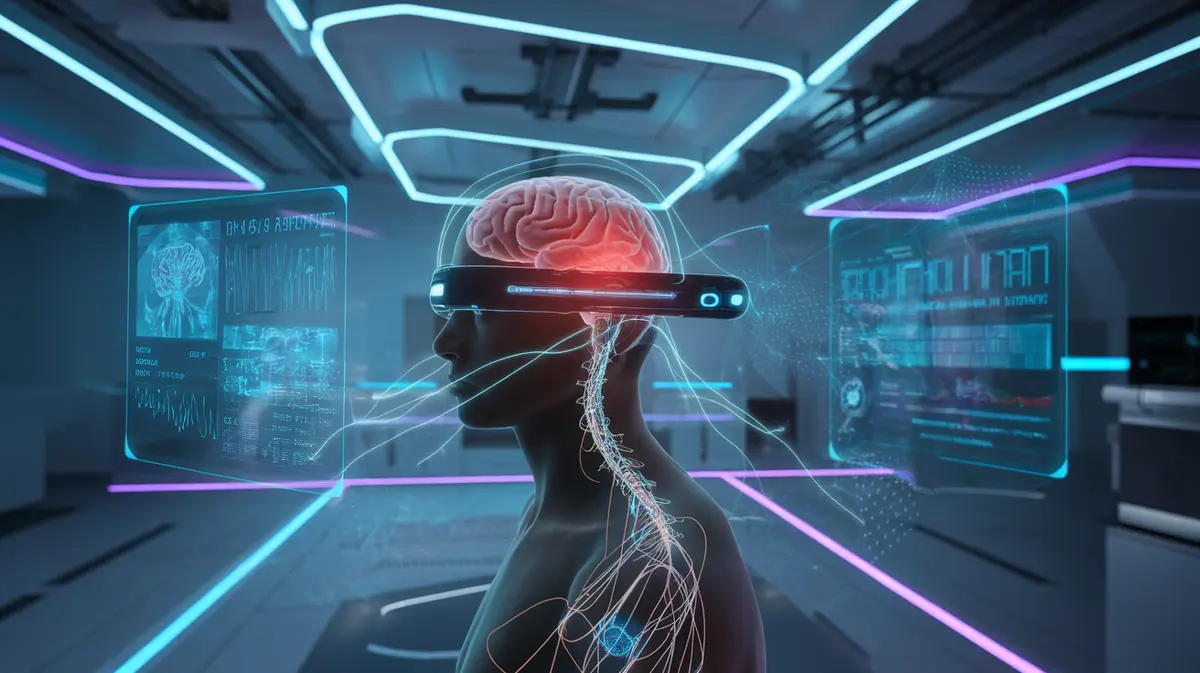
A brain-computer interface is a system that reads electrical signals generated by the brain, interprets those signals using advanced algorithms, and translates them into commands that a computer or external device can execute. Every thought, movement intention, and sensory experience produces distinct patterns of neural activity. BCIs detect these patterns and convert them into meaningful output — moving a cursor, typing text, controlling a robotic arm, or even generating speech.
The technology spans a wide spectrum, from non-invasive wearable headsets that read brainwaves through the skull to surgically implanted microelectrode arrays that record from individual neurons with extraordinary precision.
| BCI Type | How It Works | Precision | 2026 Status |
|---|---|---|---|
| Non-Invasive (EEG) | Electrodes on scalp read brainwave patterns | Moderate | Consumer headsets available |
| Semi-Invasive (ECoG) | Electrode grid placed on brain surface | High | Clinical trials expanding |
| Invasive (Microelectrode) | Tiny electrodes implanted into brain tissue | Very High | Neuralink and Blackrock in human trials |
| Hybrid / Optical | Near-infrared light measures neural blood flow | Moderate-High | Emerging research and early devices |
The Companies Leading the Neural Revolution
A new generation of neurotechnology companies is racing to make brain-computer interfaces practical, safe, and accessible. Each is pursuing a different approach, and their combined progress is accelerating the entire field.
Neuralink
Elon Musk's Neuralink has implanted its N1 chip in over a dozen human patients as of early 2026. The device, roughly the size of a coin, is embedded flush with the skull and uses 1,024 ultra-thin electrode threads to record from neurons in the motor cortex. Patients with spinal cord injuries are now browsing the web, playing games, and controlling smart home devices entirely through thought. Neuralink's surgical robot performs the implantation procedure in under two hours.
Synchron
Synchron takes a less invasive approach with its Stentrode device, which is delivered to the brain through the blood vessels — no open brain surgery required. Inserted via the jugular vein and navigated to the motor cortex, the Stentrode reads neural signals from inside blood vessels. Patients with ALS are using the technology to text, email, and browse the internet independently, achieving typing speeds of over 20 characters per minute through thought alone.
Blackrock Neurotech
Blackrock Neurotech has the longest track record in the field, with its Utah Array technology having been used in BCI research for over two decades. In 2026, Blackrock is commercializing its MoveAgain system, a fully implantable BCI that restores communication and device control for people with severe paralysis. Their neural data processing platform supports real-time decoding of movement intention, speech, and even handwriting from brain signals.
How BCIs Are Transforming Lives
Restoring Communication
For people who have lost the ability to speak due to ALS, stroke, or traumatic brain injury, BCIs are nothing short of life-changing. Neural speech decoders can now translate brain activity associated with attempted speech into text or synthesized voice output at speeds approaching natural conversation. Researchers at Stanford and UC Davis have demonstrated systems that decode speech intention at over 90 words per minute with accuracy rates exceeding 95 percent — fast enough for fluid, real-time dialogue.
Restoring Movement
Implanted BCIs are enabling people with spinal cord injuries to control robotic arms, powered wheelchairs, and even their own paralyzed limbs through neural bypass systems. These bypass devices read movement intentions from the motor cortex, skip the damaged spinal cord entirely, and deliver electrical stimulation directly to muscles — allowing patients to grasp objects, feed themselves, and perform daily tasks that were previously impossible.
Sensory Restoration
BCIs are not just output devices — they can send information back into the brain. Bidirectional interfaces now provide tactile feedback to prosthetic limb users, allowing amputees to feel pressure, texture, and temperature through their artificial hands. Early cochlear and retinal implant successors are using more sophisticated neural stimulation to provide richer auditory and visual experiences to people with hearing and vision loss.
"Brain-computer interfaces represent the most profound shift in human-machine interaction since the invention of the graphical user interface. We are moving from commanding machines with our hands to collaborating with them using our minds."
Beyond Medicine: BCIs in the Workplace and Beyond
While medical applications dominate today's BCI landscape, the technology is rapidly expanding into productivity, gaming, and cognitive enhancement. Non-invasive EEG headsets from companies like Emotiv, NextMind (acquired by Snap), and Kernel are enabling new forms of human-computer interaction that do not require surgery.
Emerging Non-Medical BCI Applications
- Focus and Productivity Monitoring: EEG headsets that track attention levels, cognitive load, and mental fatigue — helping knowledge workers optimize deep work sessions and avoid burnout
- Gaming and Entertainment: Thought-controlled gaming interfaces that add a neural dimension to gameplay, allowing players to cast spells, navigate environments, or trigger actions with mental commands
- Neurofeedback Training: Real-time brain activity visualization that helps users train concentration, stress management, and meditation through measurable neural feedback loops
- Hands-Free Computing: Cursor control, text selection, and application switching through neural signals — particularly valuable for accessibility and for professionals working in sterile or hazardous environments
- Sleep and Wellness: BCI-enabled sleep trackers that monitor brain sleep stages with clinical accuracy, delivering gentle stimulation to enhance deep sleep and improve cognitive recovery
The Challenges and Ethics of Neural Technology
Brain-computer interfaces raise some of the most profound ethical questions in all of technology. When a device can read neural activity, questions of mental privacy, data ownership, cognitive liberty, and equitable access become urgent. Who owns the data generated by your brain? Can an employer require BCI-based productivity monitoring? What happens if neural data is hacked or subpoenaed?
Key challenges facing the BCI industry include:
- Longevity and biocompatibility: Implanted devices must function reliably for decades inside the brain without causing immune reactions or signal degradation
- Neural data privacy: Brain data is the most intimate form of personal information — regulatory frameworks are still catching up to protect it
- Equitable access: BCI technology must not become a privilege reserved for the wealthy — ensuring broad access is essential for ethical deployment
- Informed consent: Patients receiving implants must fully understand the risks, limitations, and data implications of having a connected device in their brain
- Security: Neural interfaces connected to the internet present cybersecurity risks that require robust encryption and intrusion prevention
Several jurisdictions are beginning to address these concerns. Chile became the first country to enshrine neurorights in its constitution, and the European Union's AI Act includes provisions for neural data as a special category of biometric information. In the United States, the FDA has created an expedited review pathway for BCI devices, and bipartisan legislation on neural data privacy is advancing through Congress.
What This Means for Businesses
How Businesses Should Prepare
- Healthcare providers: Evaluate BCI technologies for rehabilitation programs, assistive communication, and neural prosthetics to stay at the forefront of patient care
- Software developers: Begin exploring BCI SDKs and neural input APIs — the next wave of human-computer interaction will require new interface paradigms
- Accessibility teams: Integrate BCI-compatible input methods into applications and websites to serve users who cannot use traditional input devices
- HR and workplace policy: Prepare guidelines for the ethical use of neurotechnology in the workplace, including boundaries around cognitive monitoring
- Cybersecurity teams: Develop protocols for securing neural data and understand the unique risks of brain-connected devices on corporate networks
The Road Ahead
By 2030, analysts project that the global BCI market will exceed $8 billion, driven by medical applications, consumer neurotechnology, and enterprise productivity tools. The convergence of advances in AI, miniaturized electronics, materials science, and neuroscience is accelerating progress at a pace that consistently outstrips predictions. Every month brings new milestones — faster decoding, smaller devices, less invasive procedures, and more capable algorithms.
Brain-computer interfaces are not replacing human cognition — they are amplifying it. They are giving voice to the voiceless, movement to the immobile, and entirely new modes of interaction to everyone else. The technology that once seemed like the most distant frontier of science fiction is now the most personal frontier of engineering: the space between your neurons and the digital world.
At Internet Pros, we help businesses navigate emerging technologies and build the software infrastructure needed to integrate with next-generation platforms — from accessibility-first application design to secure data architectures for sensitive biometric information. Contact us to discuss how your organization can prepare for the neural technology revolution.