AI-Powered Cybersecurity: How Machine Learning Is Defending Against Next-Generation Threats in 2026
- Internet Pros Team
- February 24, 2026
- Networking & Security
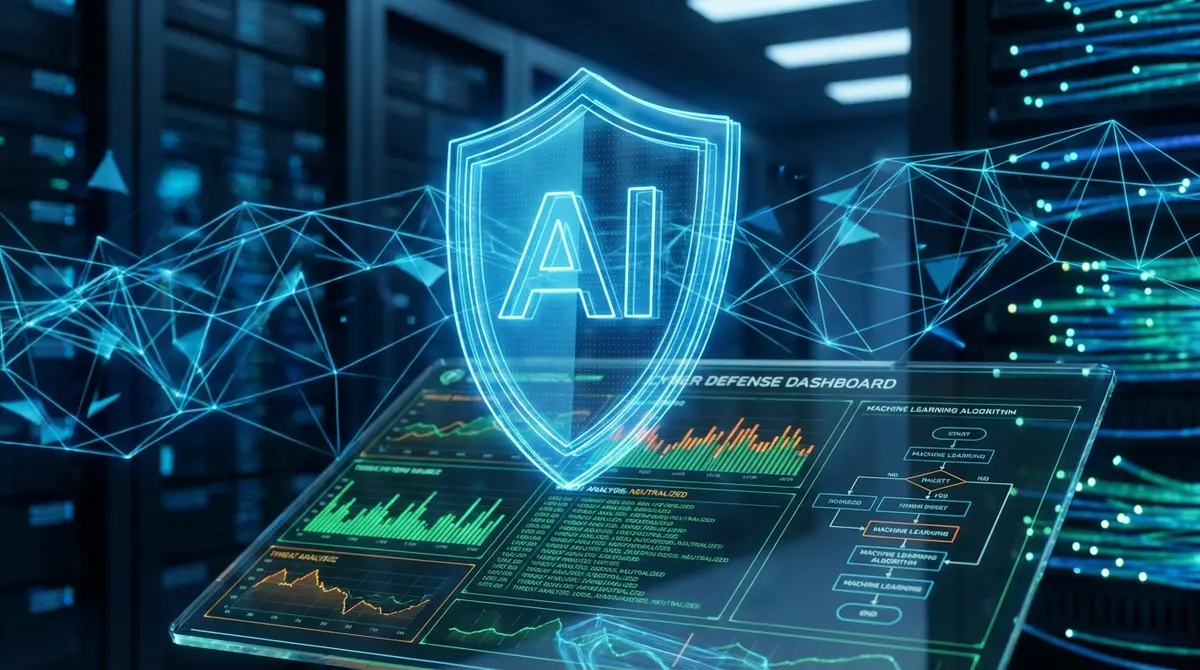
Cyber threats are evolving faster than any human team can track. Attackers are weaponizing artificial intelligence to craft polymorphic malware, launch adaptive phishing campaigns, and exploit zero-day vulnerabilities at machine speed. In 2026, the only viable defense is an equally intelligent one. AI-powered cybersecurity has moved from experimental to essential, with machine learning models now standing guard over enterprise networks, detecting anomalies in milliseconds, and autonomously neutralizing threats before they cause damage. The cybersecurity arms race has entered its AI chapter — and the defenders are gaining ground.
The Scale of the Problem: Why Humans Alone Can't Keep Up
The numbers tell a stark story. Global cybercrime damages are projected to reach $13.8 trillion in 2026, up from $8 trillion just three years ago. The average enterprise generates over 10,000 security alerts per day, and security operations centers (SOCs) are drowning in data. Meanwhile, the cybersecurity workforce gap has widened to 4.7 million unfilled positions worldwide. Traditional signature-based defenses — antivirus tools that match known malware fingerprints — catch less than 40 percent of modern attacks, which mutate faster than signatures can be written.
Machine learning changes this equation fundamentally. Instead of matching patterns from a database of known threats, ML models learn what normal behavior looks like across networks, endpoints, users, and applications — and flag anything that deviates. This behavioral approach catches novel attacks, insider threats, and zero-day exploits that signature-based tools miss entirely.
| Defense Approach | How It Works | Catches Novel Threats? | Response Speed |
|---|---|---|---|
| Signature-Based | Matches known threat fingerprints | No | Minutes to hours |
| Rule-Based (SIEM) | Triggers on predefined conditions | Limited | Minutes |
| ML Behavioral Analysis | Detects anomalies from learned baselines | Yes | Milliseconds |
| AI Autonomous Defense | Detects, investigates, and responds without humans | Yes | Real-time |
How AI Is Transforming Cybersecurity Operations
Autonomous Threat Detection and Triage
The most immediate impact of AI in cybersecurity is in threat detection. Modern AI-powered platforms like CrowdStrike Charlotte AI, Microsoft Security Copilot, and Darktrace DETECT use deep learning models trained on billions of security events to identify threats with extraordinary accuracy. These systems analyze network traffic patterns, endpoint behaviors, authentication flows, and cloud workload activity simultaneously, correlating signals that no human analyst could process in real time.
When a threat is detected, AI triage systems automatically assess severity, determine blast radius, identify affected assets, and recommend or execute containment actions — all within seconds. What used to take a SOC analyst 30 minutes to investigate now happens in under 10 seconds, with higher accuracy and zero fatigue.
AI-Driven Security Operations Centers
The modern SOC is being transformed by AI copilots that augment human analysts. These AI systems handle the exhausting first-line work: parsing thousands of alerts, dismissing false positives, enriching incidents with threat intelligence, and drafting investigation reports. Analysts are freed to focus on complex threat hunting, strategic response planning, and adversary simulation.
CrowdStrike Charlotte AI
Conversational AI assistant that lets analysts query threat data in natural language, automates investigation workflows, and generates incident summaries. Reduces mean time to investigate by 75 percent across enterprise deployments.
Microsoft Security Copilot
Integrated across Microsoft Defender, Sentinel, and Intune, Security Copilot uses GPT-4 to analyze security incidents, reverse-engineer malware scripts, summarize threat intelligence, and guide remediation steps in plain English.
Darktrace DETECT + RESPOND
Uses unsupervised machine learning to build a self-learning model of every user, device, and connection in the network. Autonomously contains threats in real time — isolating compromised endpoints or blocking exfiltration — without predefined rules.
Predictive Threat Intelligence
AI is not just reacting to attacks — it is predicting them. Machine learning models analyze dark web chatter, exploit marketplace activity, vulnerability disclosure timelines, and geopolitical events to forecast which industries, technologies, and organizations are most likely to be targeted next. Companies like Recorded Future and Mandiant use AI to generate predictive threat briefings that help security teams patch vulnerabilities and tighten defenses before attacks materialize.
The Adversarial AI Challenge
The same AI capabilities that empower defenders are being exploited by attackers. Adversarial AI represents one of the most significant cybersecurity challenges of 2026, creating an escalating technological arms race.
- AI-Generated Phishing: Large language models craft hyper-personalized phishing emails that pass grammar checks, mimic writing styles, and reference real business contexts. AI-generated phishing has a click-through rate 3x higher than traditional campaigns.
- Polymorphic Malware: AI-powered malware rewrites its own code with every execution, evading signature-based detection entirely. Each variant is functionally identical but structurally unique.
- Deepfake Social Engineering: Voice cloning and video deepfakes are being used for CEO fraud, authentication bypass, and identity impersonation at a scale previously impossible.
- Automated Vulnerability Discovery: Attackers are using AI to scan codebases and network configurations for exploitable flaws faster than defenders can patch them.
"We are entering an era where both the sword and the shield are powered by AI. The organizations that will survive are those that adopt AI-driven defense faster than attackers adopt AI-driven offense."
Key AI Cybersecurity Technologies in 2026
Deep Learning for Malware Analysis
Convolutional neural networks and transformer architectures now analyze executable files, network packets, and script behaviors to classify malware with over 99 percent accuracy — even for never-before-seen variants. These models examine structural features, API call sequences, and behavioral patterns rather than relying on known signatures, making them effective against zero-day threats and sophisticated APT campaigns.
Natural Language Processing for Threat Intelligence
NLP models continuously scan vulnerability databases, security advisories, dark web forums, and social media to extract actionable intelligence. They automatically correlate threat actor tactics, techniques, and procedures (TTPs) with an organization's specific technology stack, generating prioritized risk assessments tailored to each business.
Reinforcement Learning for Automated Response
Reinforcement learning agents are being deployed in security orchestration platforms to make real-time containment decisions. These agents learn optimal response strategies through simulation — balancing threat neutralization against business continuity — and execute playbooks that adapt based on the evolving attack scenario.
What Businesses Should Do Now
AI-powered cybersecurity is no longer optional for organizations of any size. Here is a practical roadmap for integrating intelligent defense into your security posture:
AI Cybersecurity Adoption Roadmap
- Phase 1 — AI-Enhanced Detection: Deploy AI-powered endpoint detection and response (EDR) and network detection tools that use behavioral analytics instead of signatures alone.
- Phase 2 — AI SOC Augmentation: Integrate AI copilots into your security operations center to automate alert triage, investigation, and reporting. Focus human analysts on threat hunting and strategy.
- Phase 3 — Predictive Defense: Adopt threat intelligence platforms with AI-driven prediction capabilities to anticipate and preempt attacks before they happen.
- Phase 4 — Autonomous Response: Implement AI-driven orchestration and automated response (SOAR) platforms that can contain threats in real time without waiting for human approval.
- Phase 5 — Continuous AI Red-Teaming: Use AI to simulate adversarial attacks against your own infrastructure, continuously testing and improving your defenses.
The Future of Intelligent Defense
By 2028, analysts predict that over 70 percent of enterprise security operations will be AI-augmented, up from roughly 30 percent today. Fully autonomous security operations — where AI handles detection, investigation, containment, and recovery without human intervention — are expected within three to five years for routine threat scenarios. Human analysts will evolve into AI supervisors, threat strategists, and red team operators who focus on the most complex and creative adversarial challenges.
The convergence of large language models, computer vision, reinforcement learning, and graph neural networks is creating security systems that understand context, anticipate adversary behavior, and adapt defenses in real time. For businesses, the message is clear: AI is not replacing your security team — it is giving them superpowers.
At Internet Pros, we help businesses implement intelligent security solutions that leverage the latest AI-driven threat detection, automated response, and predictive defense technologies. Whether you are upgrading your SOC, deploying next-generation endpoint protection, or building a comprehensive cybersecurity strategy, our team can guide you through every step of the process. Contact us today to learn how AI-powered cybersecurity can protect your business against the threats of tomorrow.